gräfix 418
Monodrän binder
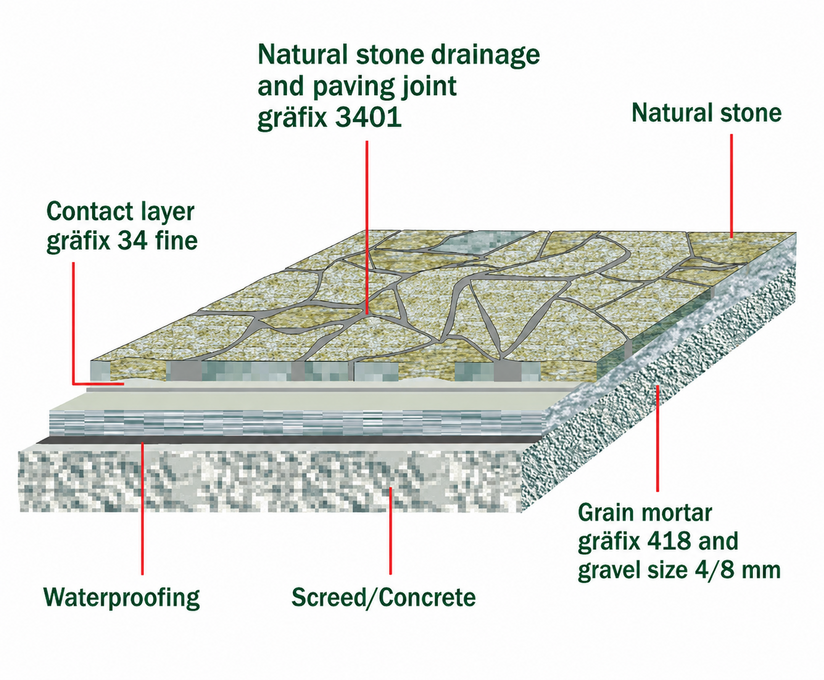
The special binder (based on trass powder, cement and other additives) reliably prevents capillary water rise whilst allowing water to pass through. When mixed with aggregate (4/8 or 5/8), gräfix 418 can be used outdoors as a drainage layer. Indoors, the coarse-grained mortar can be used as a load-distribution layer beneath a wide variety of floor coverings to achieve shorter construction times thanks to faster drying.
Coverage: at a ratio of 1 : 5 by volume = approx. 105 l
Single-grain mortar with 1 sack
at a ratio of 1 : 6 by volume = approx. 125 l
Single-grain mortar with 1 sack
Delivery: 25 kg per bag
1.05 tonnes per pallet


A high-quality specialised binder for the production of water-permeable and capillary-breaking Einkorn mortars.
- Reliably prevents water damage and fabric deterioration
- Easy to apply
- Extremely permeable
- Very low emissions – EMICODE EC1 PLUS
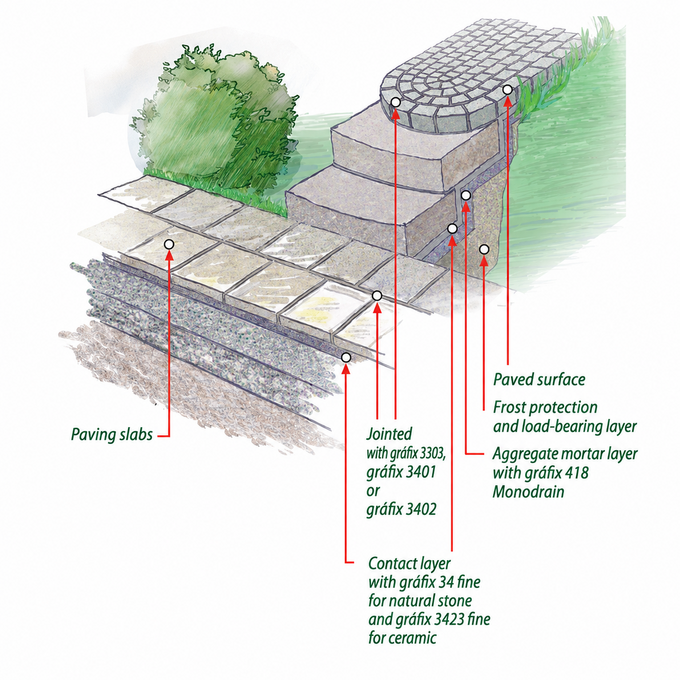
Laying natural stone or ceramic tiles on Monodrän single-grain mortar in outdoor areas
Natural stone used in outdoor areas must be frost-resistant and stain-resistant. Therefore, only dense natural stone paving, such as granite or quartzite, is suitable for this application. When laying natural stone and ceramic slabs in drainage mortar, a bonding agent is required to ensure adhesion to the single-grain mortar.
Apply Monodrän single-grain mortar
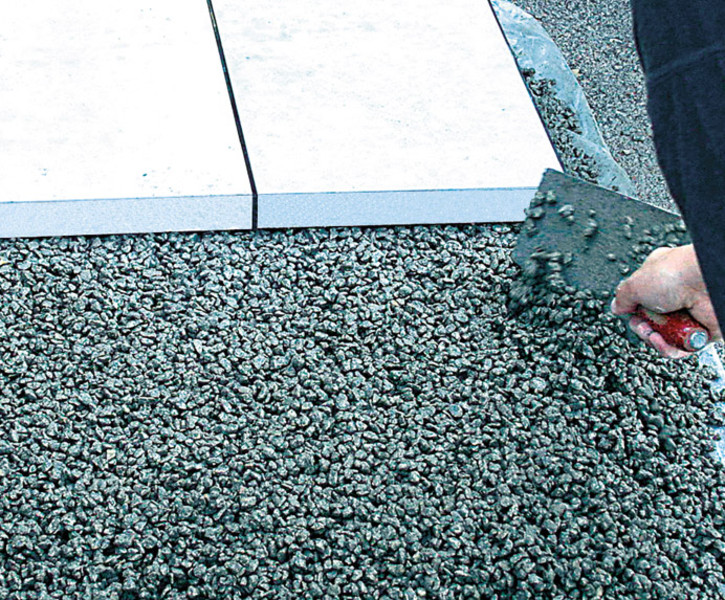
Mix gräfix 418 Monodrän binder for single-grain mortar with water and 4/8 or 5/8 grit to form a plastic mass, then apply it with a trowel to the installation substrate (screed, concrete, insulation or crushed stone base course) and level it off relatively precisely.
Apply a bonding layer
e.g. gräfix 34 fine for natural stone or gräfix 3423 fine for ceramic tiles
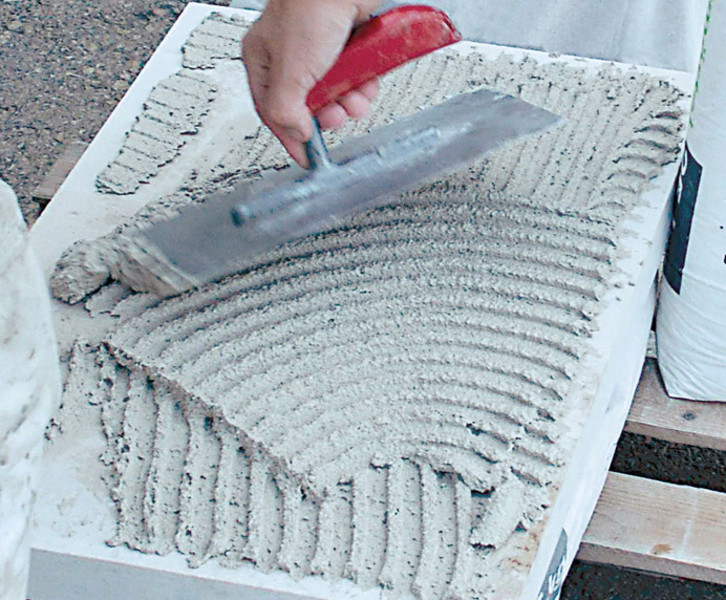
Apply to the back of the tiles using a 10-tooth or larger notched trowel to ensure the deepest possible interlocking with the single-grain mortar.
Laying the tiles
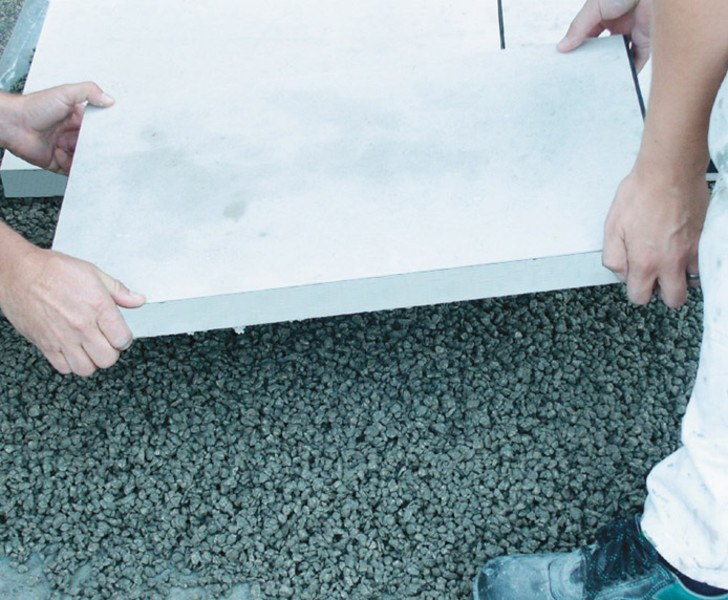
Place the tiles ‘wet-on-wet’ into the mortar bed and tap them into place.
Grouting
Once the laying mortar has set, the paving is grouted using a cement-based gräfix tile and natural stone flex grout or a gräfix natural stone drainage and paving grout.